


Understanding Carbon Credits: Worth It or Another Scheme at Play?

The Restored Lands Advocate
Carbon offsetting credits have been around for decades, and while most people have heard of them, they often don’t know what they mean or how they work.

Lauren Gifford, the associate director of Colorado State University’s Soil Carbon Solutions Center (SCSC), says
carbon credits are “lots of things,” but at their simplest they are “a representation of an action that, in a multitude of ways, addresses carbon dioxide pollution.”
She said that these offset credits are exchanged on markets as a means of transferring capital to fund climate action. There are two markets, a compliance market and a voluntary carbon market. The compliance market is when the credit program is mandated by law for regulated entities to buy allowances to cover their emissions, such as California’s Cap-and-Invest policy. Meanwhile, the voluntary carbon market is used by corporations to meet self-imposed "Net Zero" goals.

Carbon offset credit projects often start when a project is launched, such as planting a forest, investing in solar or wind farms, and setting aside grasslands. A third-party registry then verifies the project as one that can have measurable and additional carbon reduction, and then credits are issued and sold to buyers. Once a company claims the credit against their emissions, it is then deemed as "retired" so it can’t be sold again.
Experts tend to be divided on carbon credits.
While some want to shift their focus to a technology-based Carbon Dioxide Removal rather than just preventing trees from being cut, others say that carbon credits are just a “license to pollute.” Recent UC Berkeley studies have shown that up to 80% of top forest-based projects may be non-additional or over-credited.
The Trump administration has rolled back several Biden-era climate grants, though the "Polluters Pay Climate Fund" congressional proposal still aims to hold historic emitters liable. However, it has yet to be passed in either the Senate or House.

So are carbon credit programs worth it? Nicole Rosmarino, the director of Colorado’s State Land Board seems to think so.
While a nascent program, the Colorado State Land Board has begun to integrate carbon finance into public services. In a state grappling with wildfires, their program is prioritizing using grasslands as biological carbon sequestration.
“Most people often overlook how important grasslands are for long-term soil carbon storage, and given that most of our holdings are in the grasslands in Eastern Colorado, we see a particular opportunity for us to engage in this space, which can benefit land health, mitigate the climate crisis, and deliver outcomes for our beneficiaries,” she said.
Her agency is planning to use the 2.8 million acres they oversee to sell credits that will then bring funding to their public schools system. She emphasized that while it will take years for the effects to be seen and even projects to be cleared legally, there are projects in the Chico Basin Ranch and Alamosa that are showing great gains, and investors such as Land and Carbon that are excited about their program.
“We see a lot of promise,” Rosmarino said. “It is important for us in terms of looking at ways of diversifying our revenue, and it is important for our beneficiaries to make sure that we're continually growing and diversifying the funds that we are generating in order to support public schools.”
However, in California, massive wildfires have already started to burn through millions of tons of carbon sinks in the form of forests. It is for those reasons that many experts are calling offset credits ineffective and slow-moving toward carbon sequestration.
Despite these difficulties, the California Air Resources Board (CARB), however, told the Restored Lands Advocate that they will continue to push their projects and protocols under their Cap-and-Invest program and widen options, many of which are operated by tribal governments.
“One model in use by tribes is reinvesting offset project revenue to purchase more ancestral land, then developing an offset project on that land, which then generates revenue that can be reinvested into additional land,” the CARB shared.
CARB also state that their Compliance and Early Action offsets account for about 290 million metric tons of carbon reductions and sequestration under the California program, but policy advisors and researchers out of UC Berkeley's Carbon Trading Project said in a report last year that
“California sends approximately $140 million out of state each year for carbon offsets, most of which have little-to-no actual climate benefit.”
While carbon offset credit programs continue to pop up across the country, they are certainly not one-size-fits-all, and Rosmarino says that while returns may be, the State Land Board and their lessees continue to be excited about it.
“We’ve made it very clear that we are interested in fully exploring new opportunities in vanguard spaces, such as biological carbon sequestration,” Rosmarino said.
“In terms of the actual return, we're still in early stages, so that's going to be the critical test. In the long term, implementing these practices will lead to long term productivity and some stewardship of our state trust lands, and so the long term benefits can be clear now of implementing better land management practices, including revegetation, including regenerative agriculture, but in terms of the actual financial outcome, ask me again next year.”
Written by: Avril Silva
Edited by: Henry C Passerini
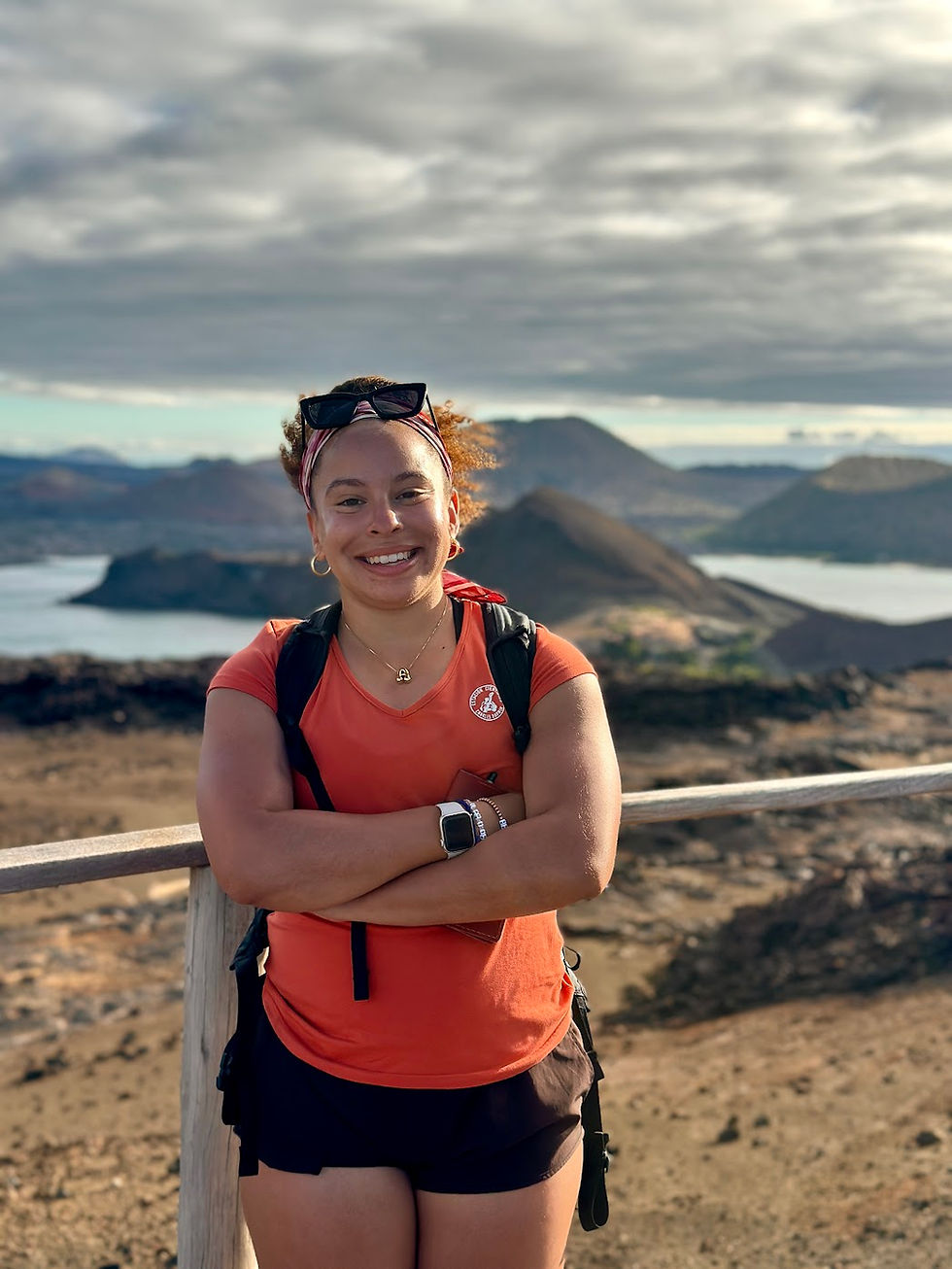
Avril Silva is currently based in New York City, but is originally from Northern Virginia where they have some of the best hiking and parks in the country. Recently graduated from George Washington University with a degree in Journalism and International Affairs, she is currently pursuing her master's in Science, Health, and Environmental Reporting at New York University. She is interested in multimedia stories in the intersection of climate, public health, and policy. Off the byline, you can usually find her doing yoga or reading. Avril is excited to bring thoughtful and community-based perspectives to Restored Lands as an Investigative Intern!


Comments